
A lump on the gum that doesn’t go away, mild discomfort when biting, or a tooth that suddenly feels different can all be signs of a dental cyst, a lesion that often goes unnoticed in its early stages.
Dental cysts
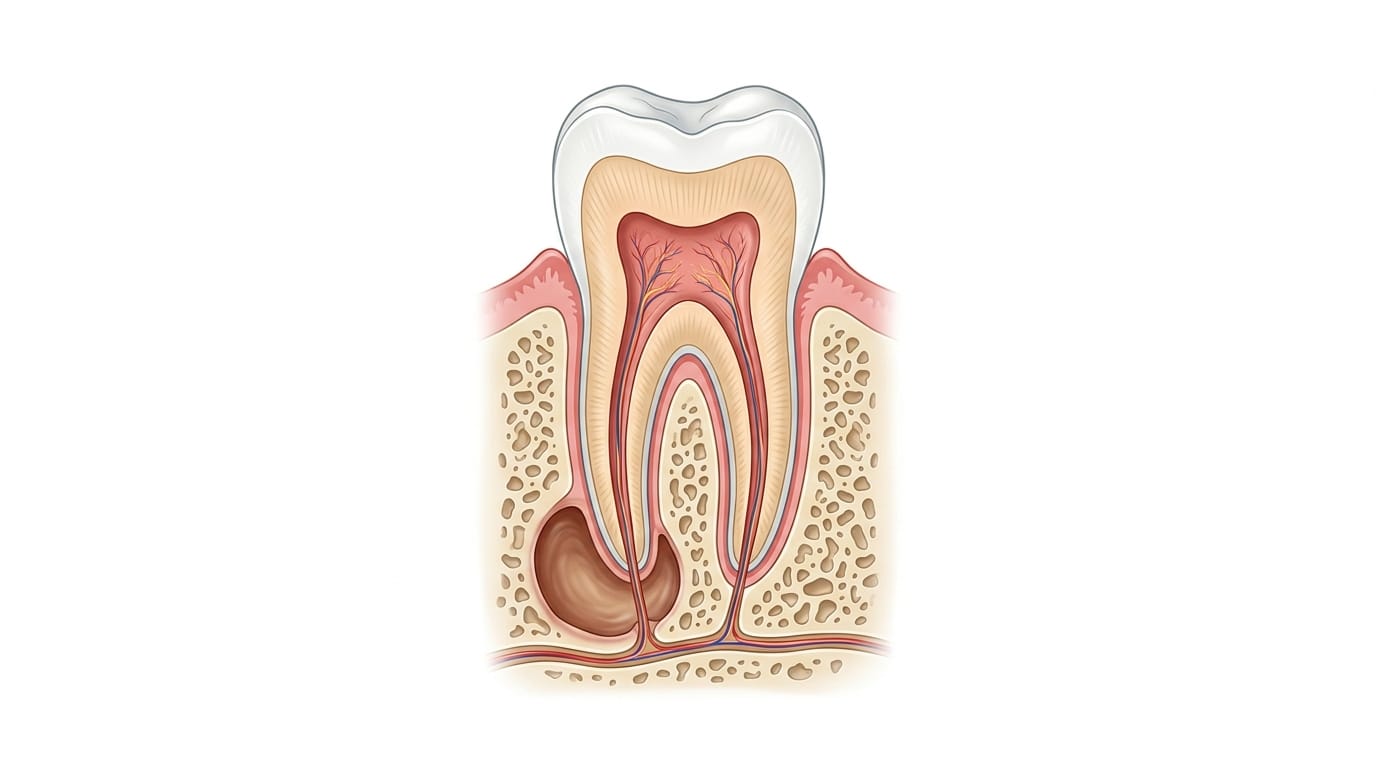
A dental cyst is a closed cavity, lined with its own membrane, that can contain fluid, soft tissue, or air. It forms in the jawbone or near a tooth’s root, and usually appears as the body’s reaction to ongoing irritation: an untreated infection in the root canal, an impacted tooth that fails to erupt properly, or leftover tissue from the formation of the teeth.
The process is gradual. Cells in the affected area begin to multiply and create internal pressure that gradually displaces the surrounding healthy tissue. Since it usually doesn’t hurt in its early stages, many people don’t realize they have a cyst until it reaches a size that starts shifting the teeth or causing swelling in the area.
Warning signs you shouldn’t ignore
There are several symptoms that can point to the presence of a dental cyst and should be checked as soon as possible:
- A lump or swollen area on the gum that doesn’t go down after several days.
- A dull ache in a specific tooth, especially when biting or applying pressure.
- A tooth that feels looser or has slightly shifted position.
- A bad taste in the mouth or minor discharge, sometimes from the cyst draining on its own.
- Marked sensitivity to cold or heat in a tooth that previously gave no trouble.
How dental Cysts are removed?
The standard treatment for removing a dental cyst is surgical extraction of the cystic membrane, known as enucleation, performed under local anesthesia. This involves completely removing the affected tissue to prevent the cyst from returning and allow the bone to regenerate normally.
Each case is planned individually, and the exact timing and scope of the surgery depend on the size of the cyst and its relationship to nearby teeth and structures.
Accurate diagnosis through imaging
A dental cyst can’t be confirmed through visual examination alone, since it can be mistaken for other lesions. A dental X-ray serves as a first filter, but it’s the dental CT scan that provides an exact three-dimensional image, needed to determine the size, location, and relationship of the cyst to nearby nerves or tooth roots before deciding on treatment.
Risks of delaying dental treatment
Letting a dental cyst go untreated increases the risk of bone loss and can shift neighboring teeth, altering the bite. There’s also the possibility of the cyst becoming infected, which worsens the pain and swelling and usually calls for a more complex surgery than if it had been treated early.
Aftercare following surgery
Following a few simple guidelines after cyst removal helps the area heal well and reduces discomfort in the first few days:
- Apply local cold during the first few hours to control swelling.
- Avoid hard or very hot foods while the area is still sensitive.
- Keep up gentle hygiene, without brushing directly over the wound at first.
- Avoid smoking or intense physical effort in the days following the procedure.
- Take the medication prescribed by the dentist and attend the follow-up check-up.
Professional dental cyst treatment in Málaga
At Gross Dentistas, we approach dental cysts with imaging-based diagnosis before any procedure, to design an oral surgery plan tailored to each case. We explain the origin of the lesion and the steps of the procedure before operating, because we believe an informed patient goes into treatment with more peace of mind.
Our team prioritizes preserving the bone and long-term oral health above any other consideration. If you notice any discomfort or change in your gums, we recommend seeking an assessment in our dental clinic in Málaga and Torremolinos as soon as possible to avoid the problem getting worse.

Ortodoncista especializada en el sistema de ortodoncia invisible, extensa trayectoria profesional y un gran número de pacientes satisfechos con los resultados obtenidos tras la finalización de su tratamiento.


