
Stained teeth are one of the most common aesthetic concerns, and not all stains have the same cause or require the same treatment. At Gross Dentistas, we want to show you the different treatments for removing teeth stains depending on their cause.
Teeth stains
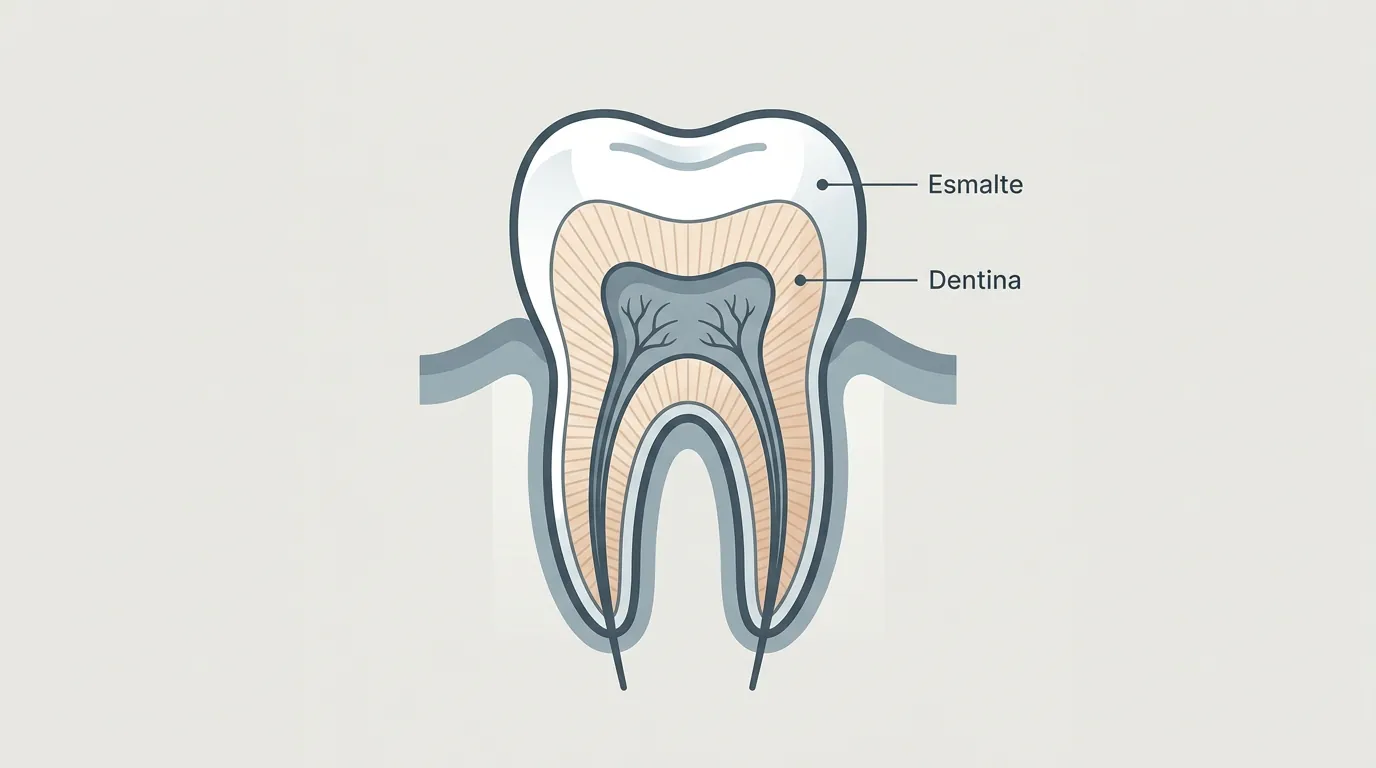
Teeth stains are changes in the natural colour of the enamel that can appear gradually or seemingly overnight, and they don’t always share the same cause. Some stains stay on the surface of the tooth, while others form from within, in the dentin, with no direct link to what we eat or drink.
The first type, extrinsic stains, are the most common and result from the build-up of external pigments from food, drinks, or tobacco. The second type, intrinsic stains, can originate in childhood, from taking certain medications, or from disturbances during tooth formation.
Over the years, enamel also wears down naturally and becomes thinner, allowing the dentin underneath—which has a more yellowish tone—to show through. This is why teeth gradually lose their brightness even without any clear external cause.
How to prevent teeth stains?
Keeping a stain-free smile largely depends on daily habits. Here are some habits that help prevent stains from forming:
- Brushing properly after meals: removing food and staining drink residue before it sticks to the enamel reduces the formation of surface stains.
- Using dental floss daily: cleans areas the brush can’t reach and prevents plaque build-up between teeth.
- Moderating coffee, tea, and red wine intake: or at least rinsing your mouth with water afterwards.
- Avoiding tobacco: one of the most common causes of stubborn stains that are hard to remove with a regular cleaning.
- Regular dental check-ups: allow tartar and pigment build-up to be detected and treated before it becomes permanent.
Treatments for removing teeth stains
Before starting any treatment, a professional diagnosis is needed to determine the type of stain and its cause. Based on that diagnosis, these are the most common options depending on the severity and origin of the stain:
Dental cleaning
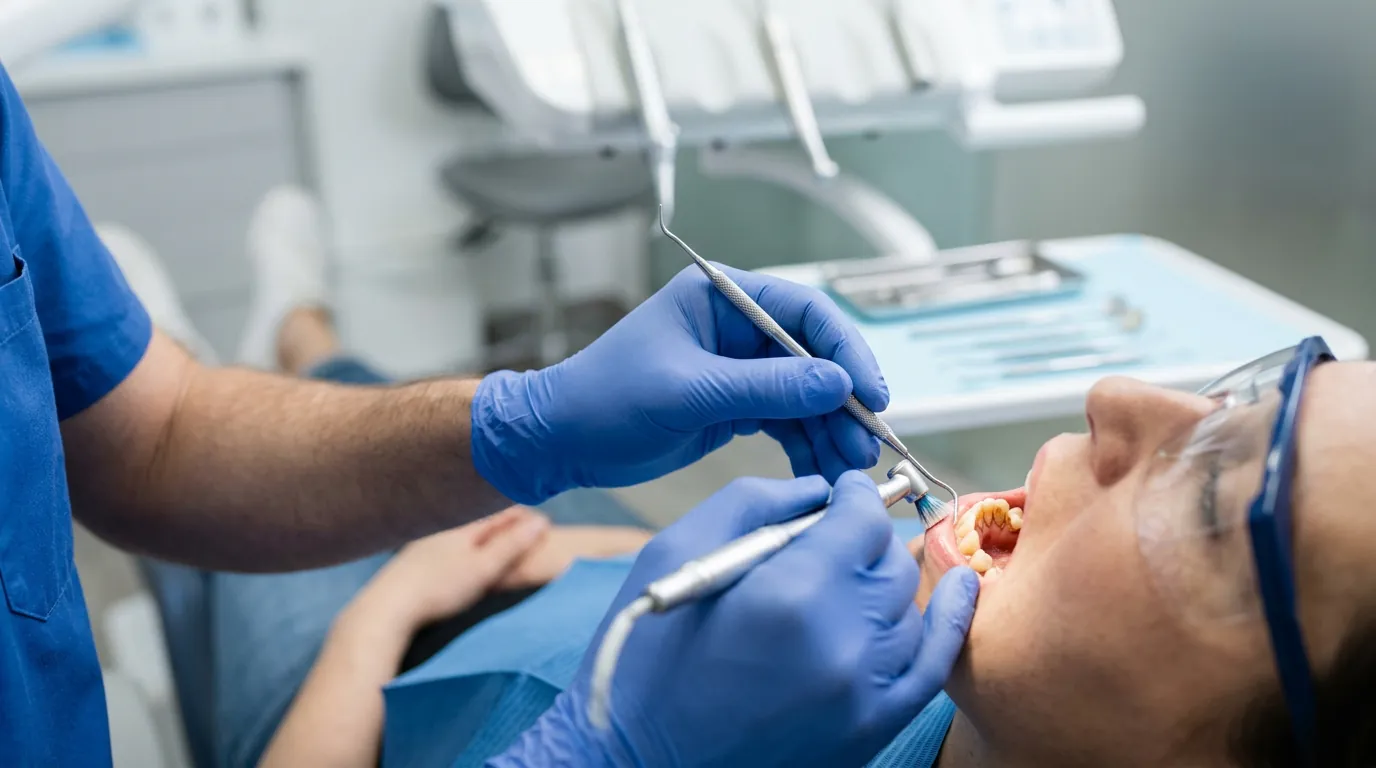
When stains are caused by regular consumption of coffee, tea, red wine, or tobacco, the simplest treatment is a professional dental cleaning. This procedure mechanically removes both tartar and pigment build-up on the enamel, with no need for chemical products.
It’s a quick, effective solution for stains that are recent and haven’t penetrated deeper layers of the tooth. To make the results last, it’s important to pair this with a good daily hygiene routine.
Enamel microabrasion
When a stain is superficial but doesn’t disappear with a regular cleaning, microabrasion is a more conservative alternative to whitening. It involves polishing away a minimal layer of enamel with a specific abrasive paste, applied in a controlled way by the professional. It’s particularly useful for whitish stains or mild tone irregularities, as it evens out the colour without chemical agents or multiple sessions.
Professional teeth whitening
If the discolouration is more widespread or doesn’t go away with a standard cleaning, professional teeth whitening is the recommended option. It’s always carried out under medical supervision, allowing the product concentration to be adjusted according to each patient’s sensitivity and gum condition.
Unlike over-the-counter kits, this treatment works in a controlled, gradual way, achieving even whitening without damaging the enamel’s structure.
Internal whitening after root canal treatment
Teeth that have had root canal treatment can darken from the inside over time, and in these cases external whitening has no effect. Internal whitening involves applying the whitening agent directly inside the pulp chamber, which is sealed beforehand, to lighten the tooth from the inside out. It’s a specific treatment, only suitable for root-canalled teeth that have changed colour.
Veneers and dental bonding
In some cases, a stain doesn’t respond to any type of whitening, such as stains caused by tetracycline use or certain congenital enamel defects. In these situations, dental veneers are the most common alternative: thin layers placed over the visible surface of the tooth that can mask the stain as well as correct minor irregularities in shape or alignment.
For more localised stains or small specific defects, composite dental bonding is a more conservative option, as it rebuilds only the affected area without covering the whole tooth. The choice between the two depends on how extensive the stain is and the overall condition of the tooth.
Dental aesthetics in Málaga for treating teeth stains
At Gross Dentistas, we are a dental clinic in Málaga and Torremolinos, and our team assesses each case individually before proposing a treatment. We take a comprehensive approach in which aesthetics always goes hand in hand with oral health, assessing the condition of the gums, the bite, and the overall harmony of the smile before deciding on the best course of action.
If you’re looking to remove stains from your teeth and restore their natural look, our dentists will provide you with a professional assessment tailored to your case. We have the technology and experience needed to plan safe treatments with long-lasting results. Book your appointment soon.

Odontóloga en Gross Dentistas. Ortodoncista especializada en el sistema de ortodoncia invisible, extensa trayectoria profesional y un gran número de pacientes satisfechos con los resultados obtenidos tras la finalización de su tratamiento.
Áreas de dedicación: Ortodoncia · Alineadores transparentes · Salud bucodental
Perfil profesional: Doctoralia · Masquemédicos · Topdoctors


